Supplier selection
How to evaluate an EMS suit manufacturer before ordering samples
Use a practical sample selection checklist to compare EMS suit suppliers on product fit, manufacturing, quality, documents and support.
Compare what the supplier can actually deliver
Ordering samples is useful, but it should not be the first time you learn what a supplier is offering. Before committing to an EMS suit sample, establish the product configuration, the work the supplier performs, the evidence it can share and the decisions required for production.
A good comparison is specific enough to uncover a mismatch. "Can you make an EMS suit?" may produce a yes from every company. "Can you supply this garment and controller combination, in these sizes, with our packaging and the documents needed for our intended market?" creates a more useful conversation.
Use the checklist below to narrow the field, then ask shortlisted suppliers for a sample against an agreed specification.
1. Identify the exact garment and controller
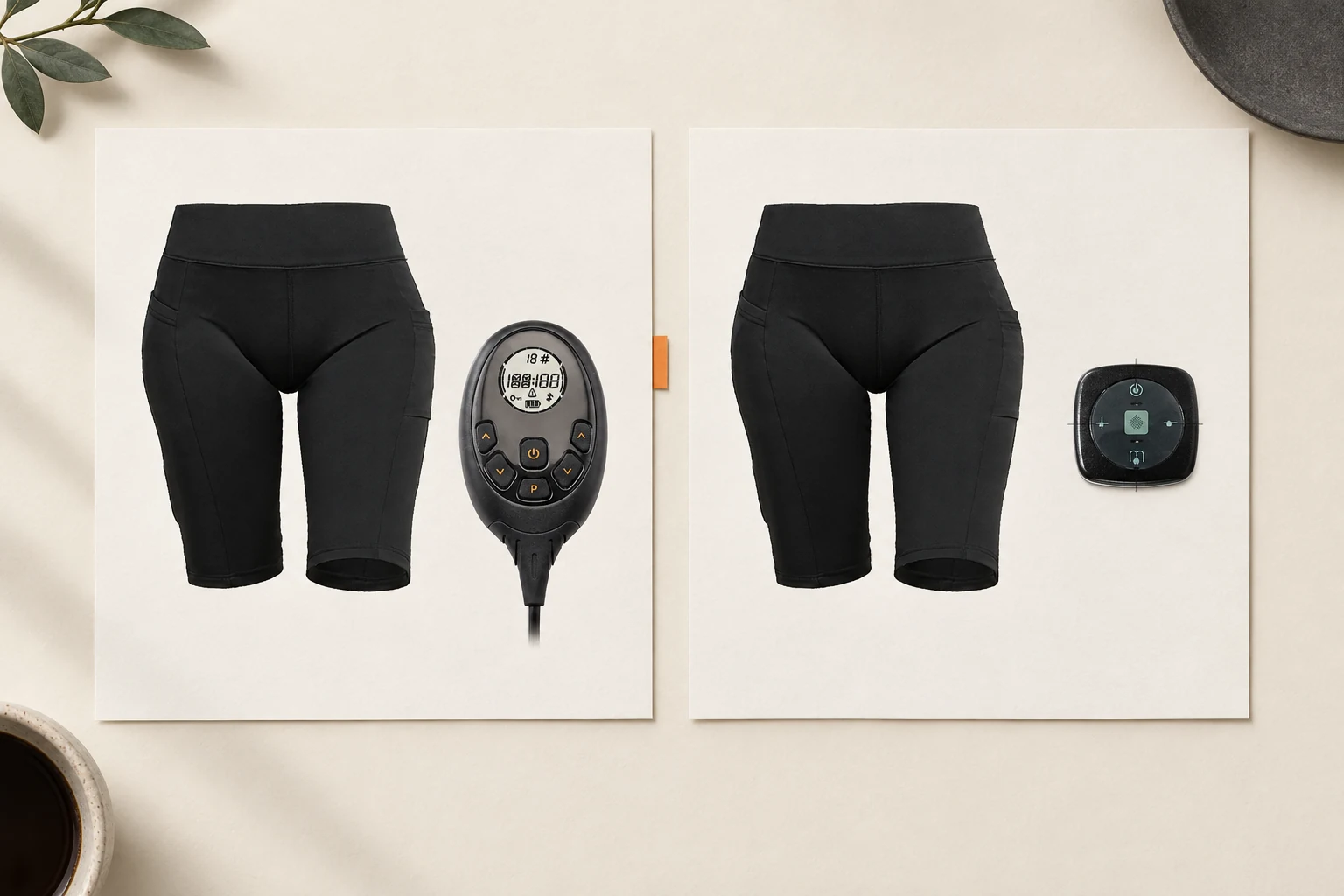
Ask for a product sheet or a written configuration naming the garment, compatible controller, control method and included accessories. Compare fit and coverage as well as electrode and channel counts. A full body suit, top, shorts and long pants solve different product needs; a controller's outputs and a garment's channels should also be described separately.
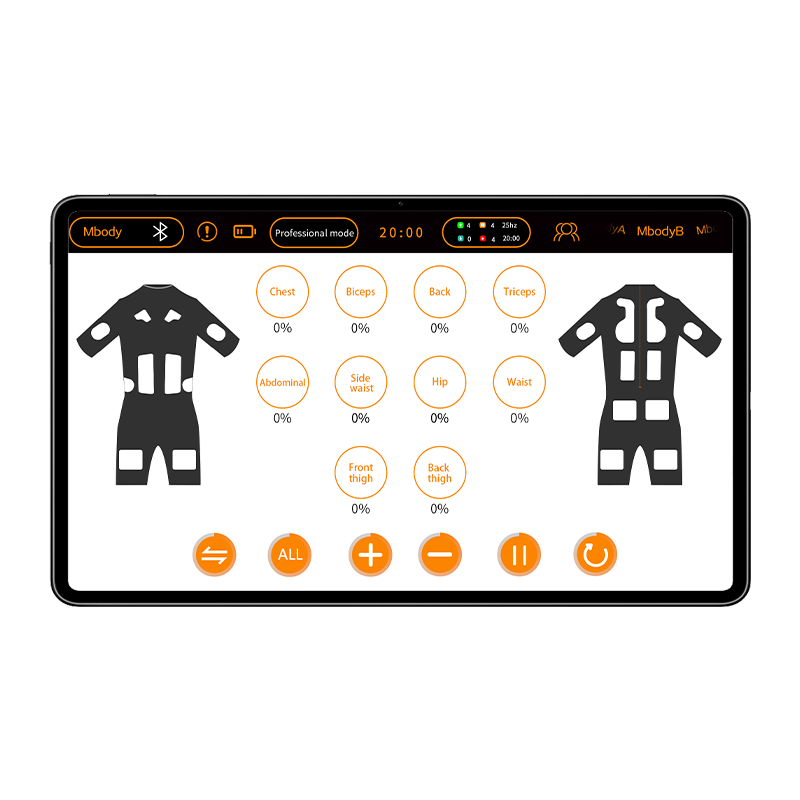
For example, the 2011 full body suit has 20 electrodes and 10 garment channels. The range includes a top, shorts and long pants, with the 2011 controller and MBODY app control. The 902K shorts use the wired 902 controller without an app, while 2105 shorts use the compact wireless 2105C controller without an app. These controller families are not interchangeable. Name the model and control method in your request.
Ask for the applicable size chart, care instructions and standard contents. A standard MacroSea set generally includes a garment, controller, charging cable, small spray bottle and manual; list the contents required for your order.
2. Separate available options from development work
Show the supplier the design you have in mind. Which changes to the logo, fabric, color, packaging or garment are available on the selected model? Which need design work, samples or a separate quote? Request a mockup or an example of the approval format so the team knows what it will be signing off.
If your product needs a branded app, describe the user interface and functions rather than requesting "an app" in general. MacroSea custom app projects start at 100 garment and controller sets. A dedicated app can include membership functions; MBODY has no membership feature. Discuss custom development fees with sales. General product minimums are quoted by model and project. A custom app can also change the questions you need to ask about account ownership, updates and support.
3. Understand the production setup
Ask who manages garment development, electronics, assembly and final inspection, and who is your contact when a design changes. Request a clear description of the production steps relevant to your order. If you need a visit or video walkthrough, focus on the parts of the process you are buying and ask which activities involve outside partners.
Founded in 2005, MacroSea operates a 1,500-square-meter facility in Shenzhen and covers the supply chain from garments to control devices. Share your model, customization and quantity requirements to discuss the production plan.
4. Ask how quality is checked and changes are controlled
Request the checks used for the garment, controller, appearance and package, and ask how the approved sample relates to the production specification. A useful response identifies what will be checked, the acceptance criteria, and how a failed item or requested component change is handled.
MacroSea inspects every unit for function, appearance and packaging before shipment. Agree on the inspection points and records for your order. You can use the supplier discussion to decide what your own team will check when samples arrive: fit across representative sizes, seams and electrode placement, controller operation, packaging and the clarity of instructions.
The NIST supplier scouting form provides a useful starting list: manufacturing processes, dimensions, materials, certifications, delivery and packaging. Use the same relevant requirements for each supplier.
5. Review documents for the model and market
Specify the countries of sale and intended use, then request the reports, declarations, labels and instructions for the selected configuration. The European Commission explains that CE requirements depend on the product's applicable rules and that the manufacturer prepares the relevant technical documentation and declaration. Agree who will obtain any additional documents your market requires.
Care instructions also differ by model. For its EMS textiles, Antelope provides washing instructions that keep the Booster out of the wash. MacroSea garments can be hand washed or machine washed on a gentle cycle in a laundry bag after the controller is removed. Include the selected product's care instructions in your review.
6. Compare support and commercial scope
MacroSea offers paid samples of products in stock. Ask for the sample contents, sample lead time, production minimum, production lead time and shipping terms. If you need several sizes, specify the size mix. Confirm whether packaging, manuals, charging cables and any customization work are included in the quotation.
MacroSea's warranty covers garments for three months and controllers for one year, excluding damage caused by the user. The team assesses the issue to arrange repair, parts or replacement. Discuss who answers technical questions, which spare components can be ordered and the support process for your range. For an app, add a point of contact for publishing, updates and ongoing access. Include the agreed support process in the project terms.
Turn the answers into a sample decision
- Product: exact garment, controller, sizes and set contents are identified.
- Customization: standard options, development work and approval steps are distinguished.
- Evidence: quality checks and relevant documents for the selected model are available for review.
- Commercial terms: sample and production scope, quantities, timing and delivery basis are comparable.
- Support: contacts and the proposed process for product or app issues are clear.
For a hypothetical gym chain choosing between two suppliers, a comparable written configuration and a clear sample plan can be more useful than two quotations for vaguely described "wireless suits." Once the shortlist answers the same questions, request samples and evaluate them against the agreed specification.
Browse the product range or send MacroSea your requirements to start that comparison.
Put it into practice
Explore the products and process.
Sources and further reading
Product and service details also draw on MacroSea's catalog and manufacturing brief. External references were read on October 30, 2026.
- NIST MEP: Supplier scouting request
Supplier scouting form listing specifications, materials, certifications, delivery and packaging requirements.
- Your Europe: CE Marking
European Commission guidance on determining applicable CE requirements, technical documentation and the manufacturer's declaration.
- Antelope: Care tips for EMS products
Manufacturer care guidance for its EMS textiles, including keeping the electronic Booster out of the wash.