OEM / ODM decisions
EMS suit OEM vs ODM: which route fits your brand?
Compare private label EMS suits and new product development by scope, approvals, ownership, and the information your manufacturer needs.
Start with the product, not the acronym
A fitness brand choosing an EMS training suit manufacturer may hear "OEM," "ODM" and "private label" in the same conversation. The useful question is simpler: are you adapting a product that already exists, or asking a manufacturer to help develop a different one?
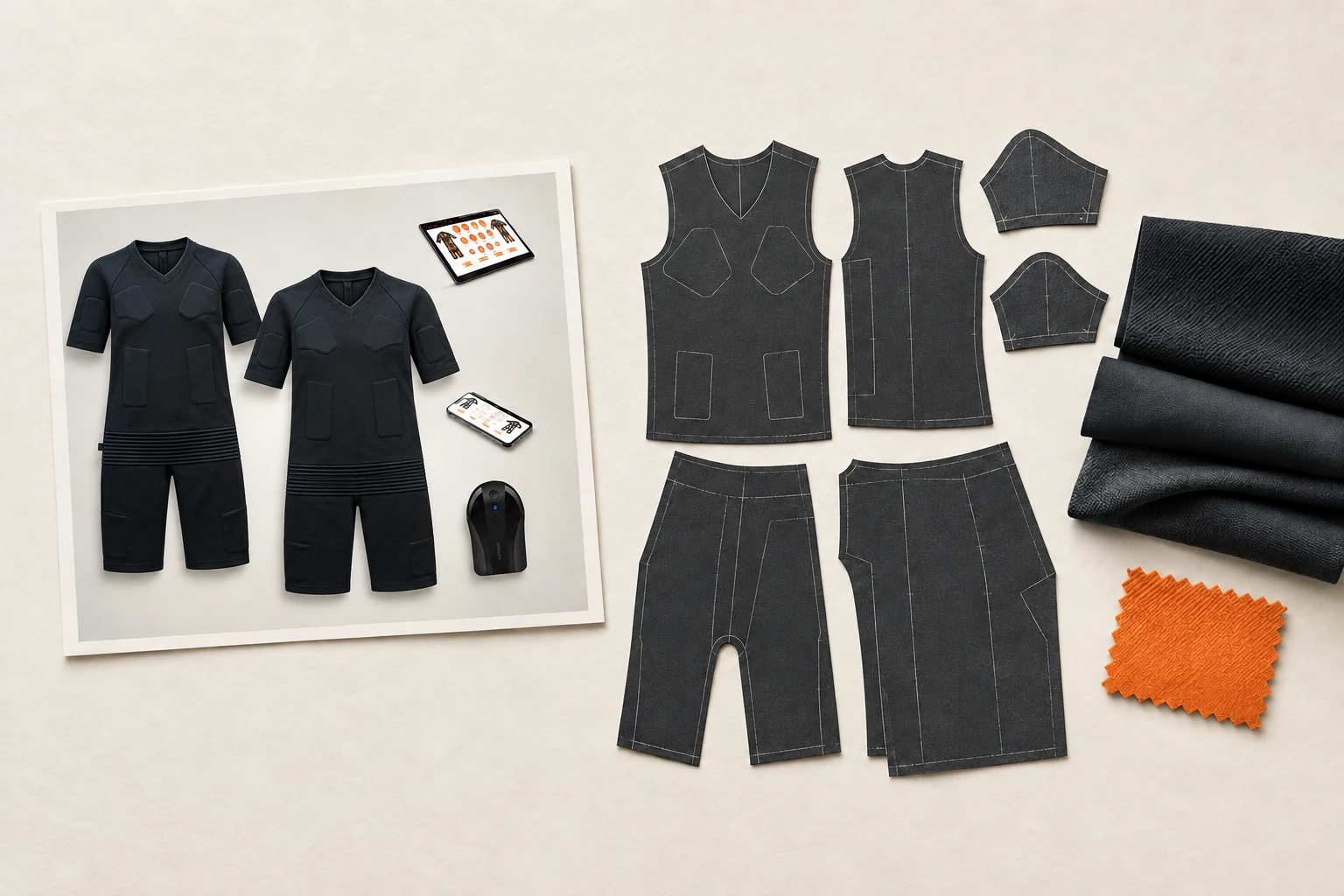
A private label project can start with a known garment and controller, then add the buyer's branding. A development project may require new decisions about the garment, electronics, user experience and packaging. Both need clear approvals, but they begin with different amounts of design work.
Terminology varies. Some electronics suppliers use OEM for manufacturing to the buyer's design and ODM for a design or platform developed by the supplier. At MacroSea, branding an existing product is the OEM route, and new product development is the ODM route. Have the proposal name the starting product, development work, approvals and deliverables.
Compare the routes side by side
| Decision | Brand an existing product | Develop a new product |
|---|---|---|
| Starting point | An existing garment and compatible controller | An idea, drawings or a defined product requirement |
| Buyer provides | Selected product, quantities and branding requirements | Intended user, design and functional requirements, plus budget and target schedule if known |
| Supplier contribution | Product configuration, brand presentation and production | Design and development work agreed for the project, followed by sampling and production |
| Key approval | Brand mockup and agreed product specification | Design, tested sample and any revisions before production |
| Commercial question | Which changes are included in the selected product? | Which development stages, deliverables and rights are included? |
There can be a middle ground: an existing system with a changed garment or a custom app. Ask the manufacturer to identify which elements remain standard and which require separate development.
When an existing product is the better starting point
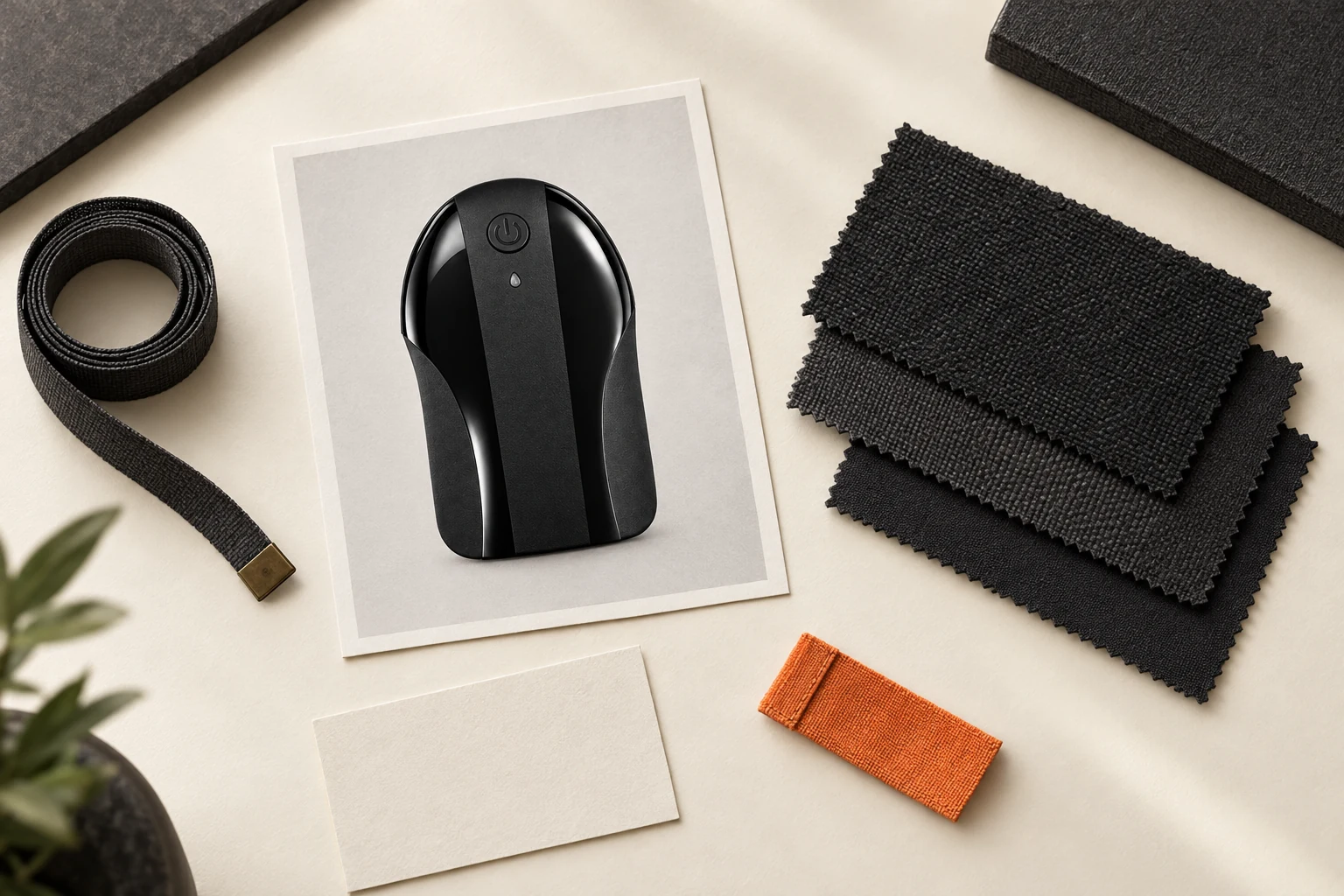
Imagine a distributor adding a branded EMS suit to its fitness equipment range. The team wants a recognizable logo, its own packaging and a system that can be reviewed before a purchase decision. Starting with an existing model lets the buyer discuss those choices against a specific garment and controller.
For MacroSea's existing product branding process, the buyer supplies the logo, approves a brand mockup, and then the project moves through bulk production, quality inspection and shipment. Paid samples are available for products in stock. Also agree on logo placement, artwork, sizes, colors, packaging and what is included in each set before approving the order.
For a distinctive garment material, controller appearance or exclusive design, describe the requirement and agree on feasibility, pricing and rights in writing.
When to choose new EMS product development
Imagine a studio equipment brand that needs a different garment configuration and a control experience designed around its own workflow. Its brief may include sketches, the intended users, coverage, fit, controller requirements, interface ideas and target market. The manufacturer can then assess what is feasible and identify decisions the team needs to make.
MacroSea's new product development process begins with an idea or drawing and agreement on appearance and functions. It proceeds to a sample, customer testing and revisions, then production against the confirmed sample, inspection and shipment. The discussion can cover products beyond the current website range as well as products already listed.
Discuss custom development fees with sales and ask for milestones and separately identified charges for design work, samples, tooling, app work and any requested testing when applicable. A proposed production schedule should state when the clock starts: for example, after the design, sample and artwork are approved. The amount of development determines the project scope; the term ODM alone does not.
Treat the garment, controller and app as one specification
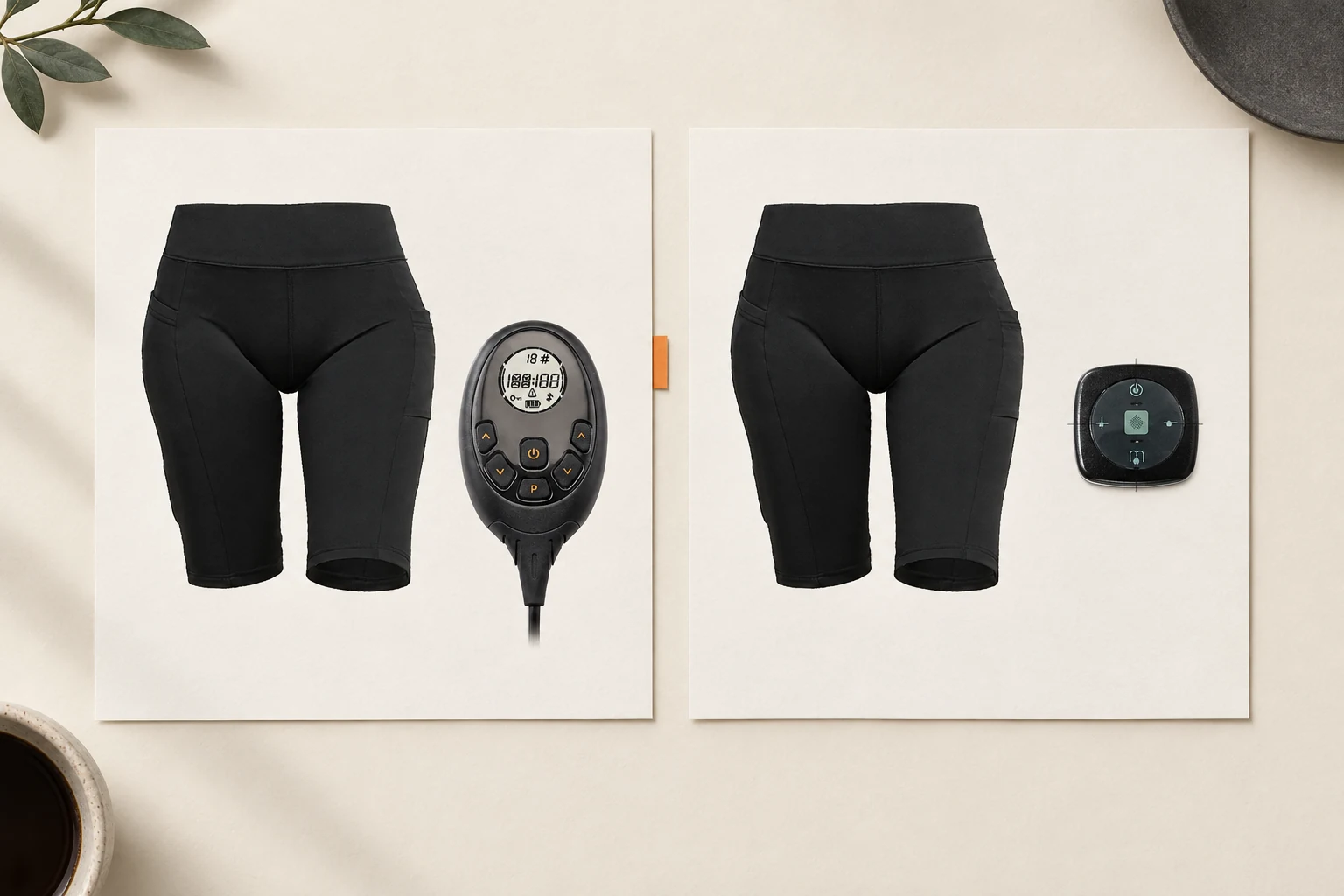
Record the exact combination you want rather than writing only "EMS suit." The 2011 range, for example, includes a full body suit with 20 electrodes and 10 garment channels, as well as a top, shorts and long pants. It uses the 2011 controller and MBODY app. The 2011, wired 902 and compact wireless 2105C controller families are not interchangeable; only 2011 uses MBODY. Add your preferred sizes, accessories and changes to the brief.
A branded garment and a dedicated app are separate decisions. MacroSea custom app projects start at 100 garment-and-controller sets; general product minimums are quoted by model and project. The customer provides UI and function requirements, and both sides confirm the design before app release. A dedicated app can include membership functions; MBODY has no membership feature. Lead times also depend on the model and project.
For a custom app, describe the screens and functions you need, the languages and markets, and who will maintain the app after launch. Ask whether the proposed controller and software combination supports the requested experience.
Agree on ownership and handover early
List what each party brings to the project, then identify what will be created or changed. Your brand artwork, a supplier's existing controller design, a new garment pattern and custom app screens may have different owners or usage rights. Ask whether an agreed design is exclusive, whether tooling is included, and what files or access you receive at handover.
For software, discuss the publishing account, update responsibilities, support and access to relevant assets. Apple's app transfer guidance shows why account ownership and transfer arrangements deserve a conversation before launch. Document ownership, exclusivity, access and responsibilities in the project agreement.
Make the choice with a short brief
Choose an existing model when its garment, controller and functions already fit your offer and the main changes are branding or agreed options. Explore new development when a product requirement cannot be met by a suitable existing configuration. If you are unsure, send both the essential requirements and the details you are willing to adapt; a supplier can explain the available starting points.
Include your company, target product, intended market, planned quantity and customization requirements. Separate must-haves from preferences and identify who will approve the sample and final artwork. This gives both teams a basis for comparing scope, milestones and quotation details.
Explore MacroSea's OEM and ODM options or discuss your project with the selected product and requirements in hand.
Put it into practice
Explore the products and process.
Sources and further reading
Product and service details also draw on MacroSea's catalog and manufacturing brief. External references were read on October 30, 2026.
- ANZER: Electronic OEM vs ODM
Electronics manufacturer's explanation of industry terminology, design responsibility and different starting points.
- WIPO: IP Agreements with Suppliers
Distinguishes existing and newly created intellectual property and recommends defining ownership and use in supplier agreements.
- Apple Developer: Overview of App Transfer
Explains app transfer between developer accounts and the need to meet transfer criteria and exchange code and assets.